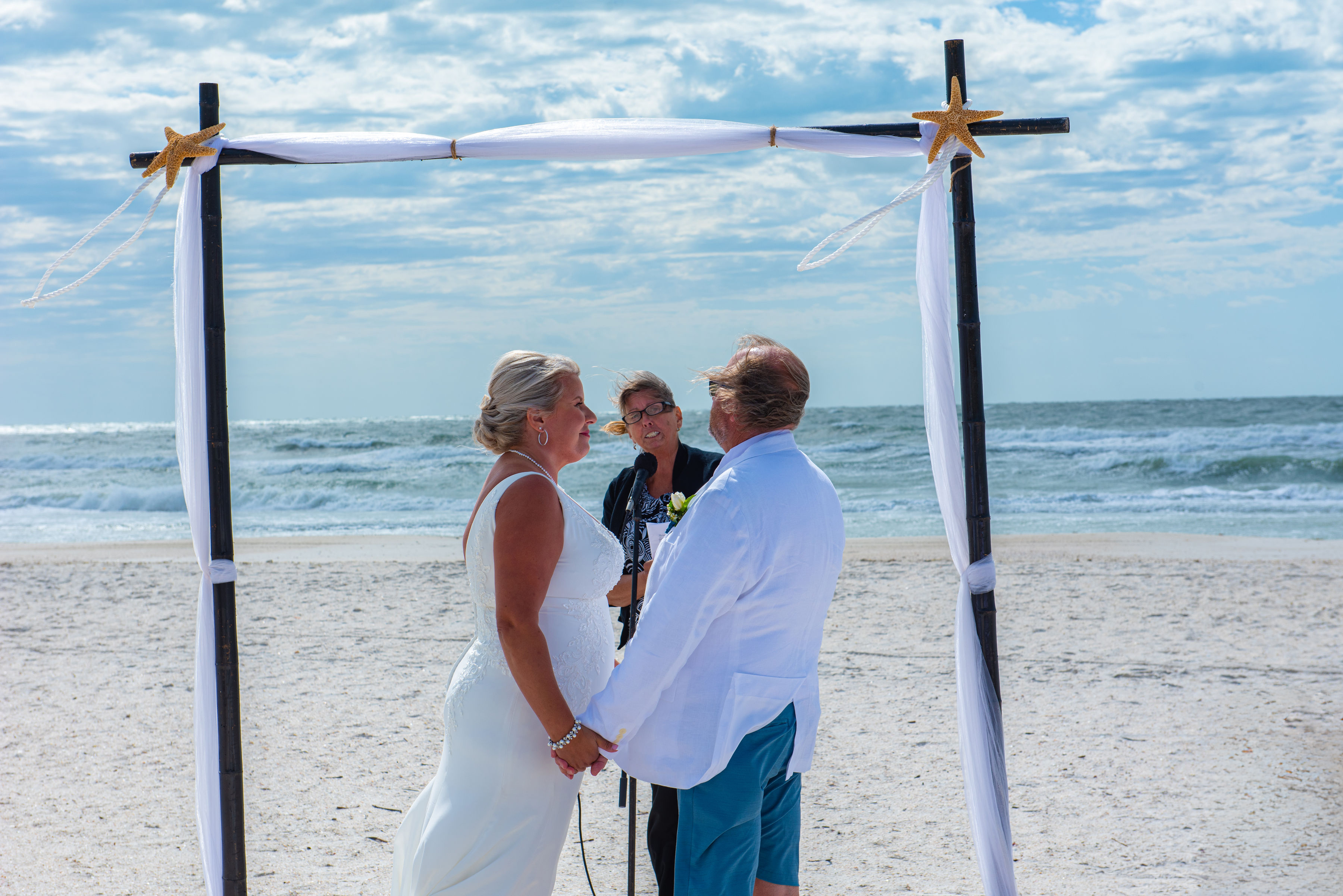
You've decided to skip the big wedding. Congratulations. That decision alone takes more courage than most people realize. Eloping in Florida is absolutely legal, surprisingly straightforward, and deeply romantic when done thoughtfully. However, like any ceremony, it requires a bit of planning to pull off without stress.
This guide walks you through everything you need to know. From obtaining your marriage license to choosing a location, hiring your photographer, and handling the logistics, I'll cover it all. Therefore, by the time you finish reading, you'll have a clear picture of what your Florida elopement looks like from start to finish.
Eloping isn't giving something up. It's choosing what matters most and letting go of everything else.
Step One: Florida Marriage License Requirements
Before anything else, you need a valid Florida marriage license. Fortunately, the process is simpler than most couples expect. Here's what you need to know.
Visit a Florida Clerk of Court Office
Both applicants must appear in person at any Florida Clerk of Court office. You do not need to apply in the county where your ceremony takes place. Additionally, the license is valid statewide.
Bring Valid Government-Issued ID
Each applicant needs a valid driver's license, passport, or state-issued ID. You'll also need your Social Security numbers. If either party was previously married, bring documentation of how that marriage ended (divorce decree or death certificate).
Know the Waiting Period Rules
Florida requires a three-day waiting period after obtaining your license before you can marry, unless you complete a premarital preparation course. That course eliminates the waiting period and also reduces your license fee. Consequently, many eloping couples opt for the course to gain scheduling flexibility.
License Validity Window
Your Florida marriage license is valid for 60 days after issuance. Therefore, aim to obtain it no more than four to six weeks before your ceremony date. The fee is typically around $86 for out-of-state residents and $61 for Florida residents who complete the premarital course.
Florida law requires at least one witness at your ceremony in addition to the officiant. Your photographer can serve as that witness. Nevertheless, some couples prefer to bring one or two close friends or family members to share the moment.
Step Two: Choose Your Officiant
Florida allows a wide range of people to legally perform marriage ceremonies. Your options are broader than you might expect.
Ordained Ministers and Religious Officiants
Any ordained minister of a recognized religious organization can perform your ceremony. Many couples find a local officiant through wedding planning sites or direct searches. Furthermore, numerous officiants specialize in intimate elopement ceremonies and can adapt beautifully to an outdoor setting.
Online Ordination
Florida law recognizes ordinations through Universal Life Church and similar organizations. Therefore, a close friend or family member can get ordained online and legally perform your ceremony. This option adds a deeply personal dimension that many elopement couples love.
Notaries Public
Florida notaries public are also authorized to solemnize marriages. As a result, you have an additional official option if you prefer a more civil approach. Many notaries offer elopement packages and are experienced with outdoor ceremonies.
Step Three: Pick Your Location and Timing
Florida's year-round warmth and stunning natural diversity make location selection one of the most enjoyable parts of planning your elopement. However, a few practical considerations will save you significant stress on the day itself.
When to Schedule Your Ceremony
Golden hour is non-negotiable in my opinion. The hour after sunrise and the hour before sunset produce the warmest, softest light that makes every elopement photo luminous. Moreover, for beach ceremonies specifically, golden hour also means fewer crowds and cooler temperatures. Avoid Florida's midday sun if at all possible, particularly between May and September.
Seasonal Considerations
Florida's "wedding season" runs October through April. During those months, temperatures are mild, humidity is lower, and afternoon storm risk drops significantly. Summer elopements are absolutely possible, but you should plan for early morning ceremonies to beat both the heat and the afternoon thunderstorms. Additionally, booking your photographer and any venues well in advance is essential during peak season.
Location Permits
Many of Florida's most beautiful ceremony locations require advance permits. Specifically, most public beaches, state parks, and county parks have permit requirements for official wedding ceremonies. The good news is that the process is usually straightforward. Therefore, start this process at least 60 days before your date. I can help guide you through permit requirements for popular Tampa Bay locations.
The best elopements are planned enough to be stress-free and spontaneous enough to feel alive.
Step Four: Book Your Photographer
Your elopement photographer is arguably your most important vendor. Unlike a traditional wedding where multiple vendors capture different moments, your photographer is often the only person besides your officiant documenting your entire day.
What to Look For
Look for a photographer whose style matches your vision. If you're drawn to soft, romantic images, don't book someone who shoots dark and moody editorial. Additionally, look for someone who has specific experience with elopement and intimate ceremonies. The skill set is genuinely different from traditional wedding photography. You want someone comfortable directing two people in natural light across multiple environments, not someone who relies on a large wedding party and ballroom setup.
Have a Real Conversation First
Before booking, have a phone or video call. Your photographer will be with you during one of the most intimate moments of your life. Consequently, the personal fit matters as much as the portfolio. You should feel comfortable, unhurried, and genuinely excited after that conversation.
Understand What's Included
Ask specifically about the number of edited images, turnaround time, print rights, and whether the photographer offers location scouting or planning assistance. Some elopement photographers, like myself, offer active help selecting and planning the location as part of the package. Furthermore, clarify travel fees if your location is more than 30 to 45 minutes from the photographer's base area.
Step Five: Tell Who Needs to Know
One of the most personal decisions in planning an elopement is who, if anyone, you invite or tell beforehand. There's no single right answer, and your choice should reflect what feels authentic to your relationship.
Keeping It Completely Private
Some couples elope in complete secrecy and announce afterward. This approach is entirely valid and more common than you might think. It eliminates outside pressure, unsolicited opinions, and complicated feelings about who made the guest list. Additionally, the announcement itself becomes a joyful event shared on your terms.
Including a Small Witness Group
Others include a handful of the people who matter most, typically just parents, siblings, or a best friend or two. This hybrid approach preserves the intimacy of an elopement while giving your closest loved ones a shared memory. If you go this route, be thoughtful about keeping the circle small enough that it still feels like your day rather than a scaled-down traditional wedding.
Quick Elopement Planning Checklist
Marriage license obtained (allow for 3-day waiting period unless completing premarital course). Officiant booked and briefed on your vision. Location confirmed and permitted if required. Photographer booked with date and location confirmed. Witness arranged (at least one required by Florida law). Ceremony details planned, including any vows, readings, or music. Celebration plans made for after, whether dinner for two or a bigger gathering.
After the Ceremony: Making It Official
After your ceremony, your officiant is responsible for completing and returning the marriage license to the county clerk. You don't need to do anything additional at that point. Subsequently, the county will record the marriage and mail certified copies to you. Those certified copies are what you'll use to update your name on official documents if you choose to do so.
The process typically takes a few weeks from ceremony to receiving your certified copies. Therefore, if you have travel or name-change plans that depend on timing, factor that into your scheduling.
Ready to Make It Official?
Let's plan your Florida elopement together.
I help couples navigate every detail, from location scouting to permit guidance, so your day feels effortless and completely yours.
Start Your Inquiry